
Cherina Scholes – Lead Manager, Cultural Education & Tourism
From education to connection, transforming First Peoples Cultural Tourism
Cherina Lea Scholes says her career has never been about climbing the corporate ladder, but working with and serving people.
A proud Dunghutti woman from the Mid North Coast of NSW, Cherina Lea is now Lead Manager Cultural Education and Tourism at GLALC with a key role in developing the Cultural Connections Hub.
Her goal is to develop visitor experiences deeply rooted in First Peoples knowledge of the world’s oldest living culture.
“Culture is not a commodity,” she says. “Gandangara is here to offer an experience that illuminates spirit, touches souls and brings people back to self.”
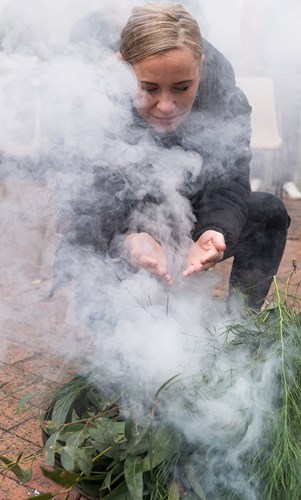
Her vision is to attract local and international visitors to Liverpool to immerse them in Aboriginal culture. This could include an On Country Cultural Site Tour with a ranger on Heathcote Ridge, sampling bush foods such as wattleseed scones with bush honey or taking part in a Yarning Circle with Elders.
Born in Newcastle on Awabakal Country, Cherina Lea moved to Liverpool as a child and has lived here for more than 35 years, saying that “this Country and Community has accepted me”. She has been a GLALC member for more than a decade and worked with Gandangara for three-and-a-half years before taking on her latest role.
Her professional journey is anchored in a 15-year career in education. During the earlier years of her career she was an Aboriginal Community Education Officer for the Department of Education. Through her passion for working with children and community, she decided to further her career aspirations and went to university as a mature age student to pursue a Bachelor of Education specialising in Aboriginal and Torres Strait education.
From education to connection, transforming First Peoples Cultural Tourism
During her study she worked for Sydney Catholic Schools as the Regional Aboriginal Community Liaison Officer for five years, where she developed a deep understanding of how to design programs around First Peoples students’ and community needs.
Her transition into child protection as an Aboriginal Casework Consultant for the Department of Communities and Justice further opened her eyes, heart and spirit to the depth of work that needed to be done.
“I realised that we needed to comprehensively review and reform the existing programs to ensure the protection of Aboriginal children and their families,” she says.